
No More Streetcars
The case for streetcar pessimism

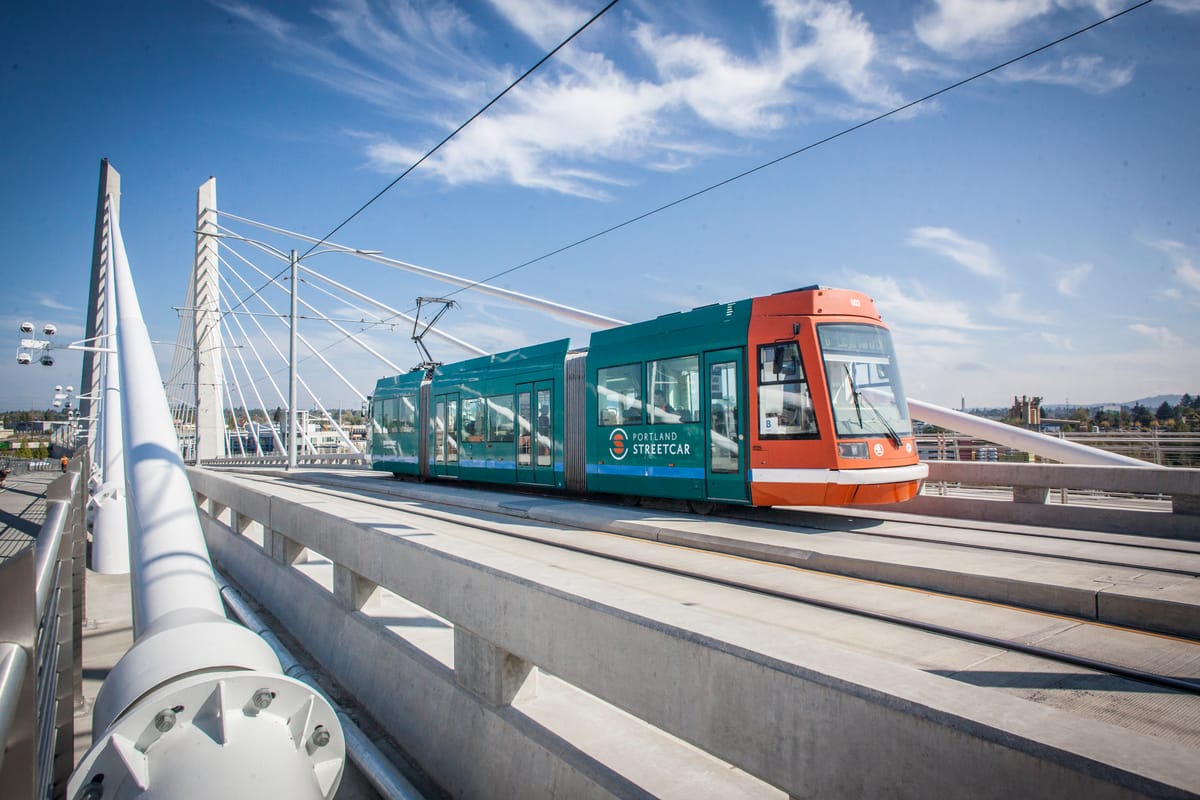
Portland eastside streetcar loop, today generally called the "A and B loop", consists of 5.3km of track, built for $150 million in 2007. At 2,600 average weekday riders, it significantly underperforms the NS line streetcar and nearly every frequent service Trimet bus line. These ridership numbers are largely a result of lackluster service: trains on the loop run every 30 minutes in each direction, creating long waits for trains and making transfers to the streetcar difficult.
The loop has problems common to many Obama-era streetcars: it was focused on inducing real estate development and completing a major capital project, rather than operating a sustainable transit service. It connects to desirable areas, but it's slow and infrequent – the actual rider experience seemingly an afterthought in the design process.
Portland's streetcars are sometimes recognized as successes, because they have relatively high ridership compared to other modern streetcars:
| System | Daily Ridership | Length |
|---|---|---|
| Portland Streetcar | 8,339 | 11.83 km |
| KC Streetcar | 4,393 | 9.2 km |
| Seattle Streetcar | 4,200 | 6.1 km |
| DC Streetcar | 2,200 | 3.9 km |
| The Hop [Milwaukee] | 1,426 | 3.4 km |
| El Paso Streetcar | 600 | 7.7 km |
| Atlanta Streetcar | 600 | 4.3 km |
| Oklahoma City Streetcar | not provided | not provided |
Source: Wikipedia. Some of these figures are out of date
However, "Best performing modern US streetcar" is not a very distinguished category. Modern streetcars are characterized by low ridership, unpopularity, and high costs, and multiple lines in the above list are in danger of closing in the near future. Compared to high-performing light rail and bus lines in the Portland area, the streetcar looks much less impressive:
| Line | Daily Ridership | Type |
|---|---|---|
| MAX Blue Line | 31,190 | Light Rail |
| MAX Green Line | 11,940 | Light Rail |
| MAX Red Line | 11,800 | Light Rail |
| 72 | 10,370 | Bus |
| MAX Yellow Line | 9,830 | Light Rail |
| 20 | 9,530 | Bus |
| FX2 | 8,100 | Bus Rapid Transit |
| MAX Orange Line | 6,700 | Light Rail |
| NS Line | 4,937 | Streetcar |
| A Loop | 1,462 | Streetcar |
| B Loop | 1,642 | Streetcar |
Source: 2024 Trimet Ridership Report, Portland Streetcar
Streetcar advocates generally prefer to use ridership per kilometer or ridership per service hour rather than overall ridership as success criteria. After all, streetcar lines are short and reach fewer destinations than longer bus and light rail lines. However, I feel strongly that this elides other tradeoffs in a way that makes these "per capita" metrics more favorable to streetcars. All transit systems balance ridership with geographic coverage, and successful systems will inevitably have some lower-ridership route segments that allow them to achieve close to universal access to transit services. Central city streetcar systems are able to operate in dense city centers because of the existence of other, more coverage-focused lines, and you can't analyze those parts of the system in isolation.
Along those lines, streetcar ridership doesn't even seem particularly impressive given that the streetcar is essentially designed for high ridership per mile. Streetcars almost exclusively run through dense, inner city neighborhoods with above average transit ridership, and have transfers from nearly every other high ridership line in the city. These streetcar lines should be part of the daily life of central city residents and a regular transfer destination for last-mile trips. But because of slow speeds and long wait times, they struggle to compete with parallel bus lines and other transportation modes, like walking. Thousands of people live in the central city and many thousands more ride a bus or train into it every day, and yet very few of them ultimately end up on a streetcar.
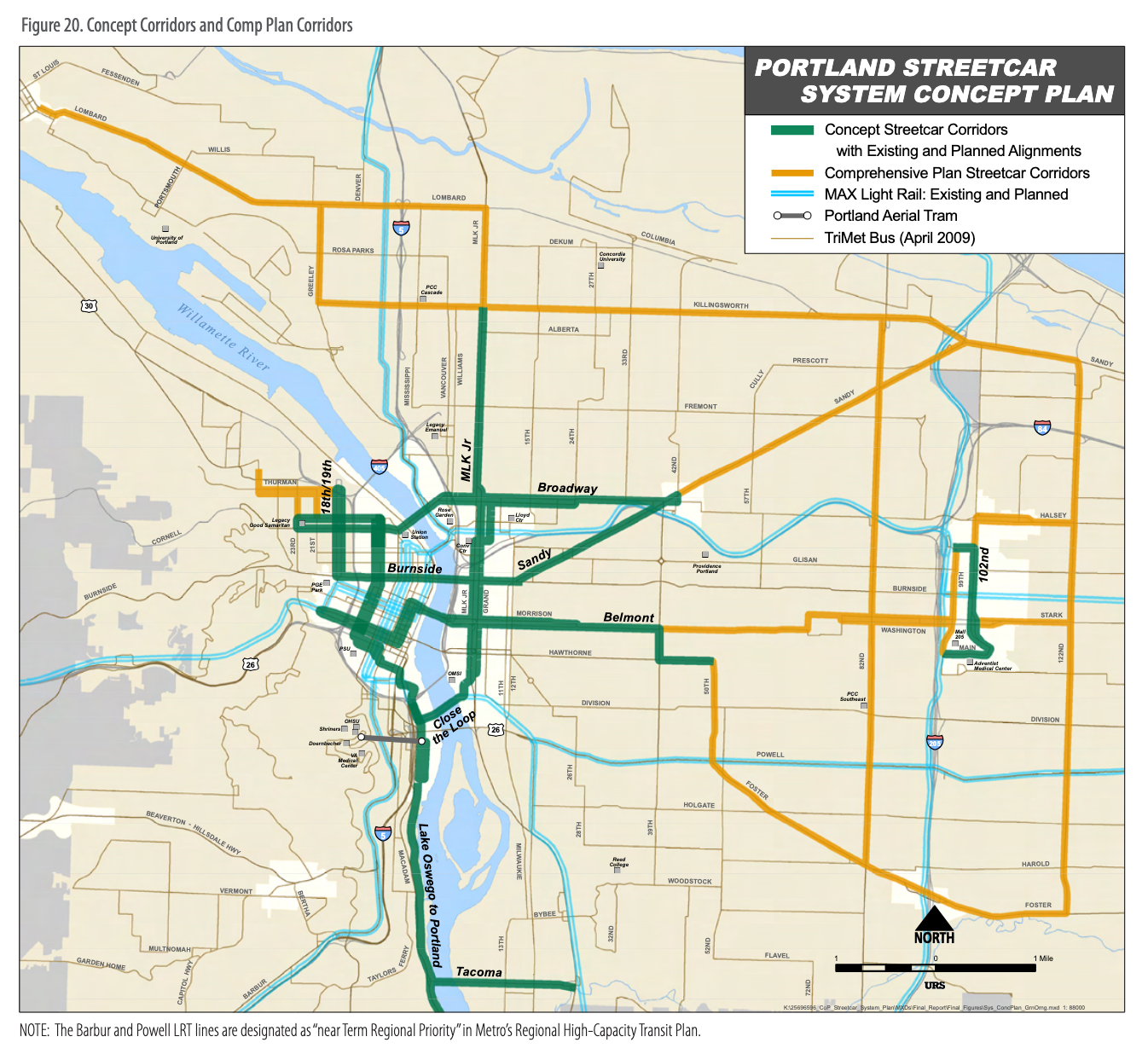
Given the state of the existing network, transit advocates enthused about the 2009 streetcar concept plan should be concerned what results we're going to get from any new streetcar lines. Advocating for streetcar tracks on the Burnside bridge, or for streetcar service on Sandy, are expensive propositions with only tenuous benefits for transit riders. We should be especially concerned about a repeat of the eastside streetcar loop, where our capital funding outpaced our operations budget and the resulting transit line was never able to run useful levels of service.
For criteria about what a useful new streetcar line might look like, we can look at design characteristics of high performing tram systems abroad:
- Trains arriving at least every 15 minutes, ideally more
- Exclusive tracks that aren't shared with other vehicles, placed in the center of the road
- Intersection closures that reduce the number of traffic lights that trains have to navigate
And when I say abroad, I of course mean North Portland – this list is actually based on the MAX Yellow Line. Unlike other MAX lines, the Yellow Line runs exclusively at grade on surface streets, similar to a streetcar.
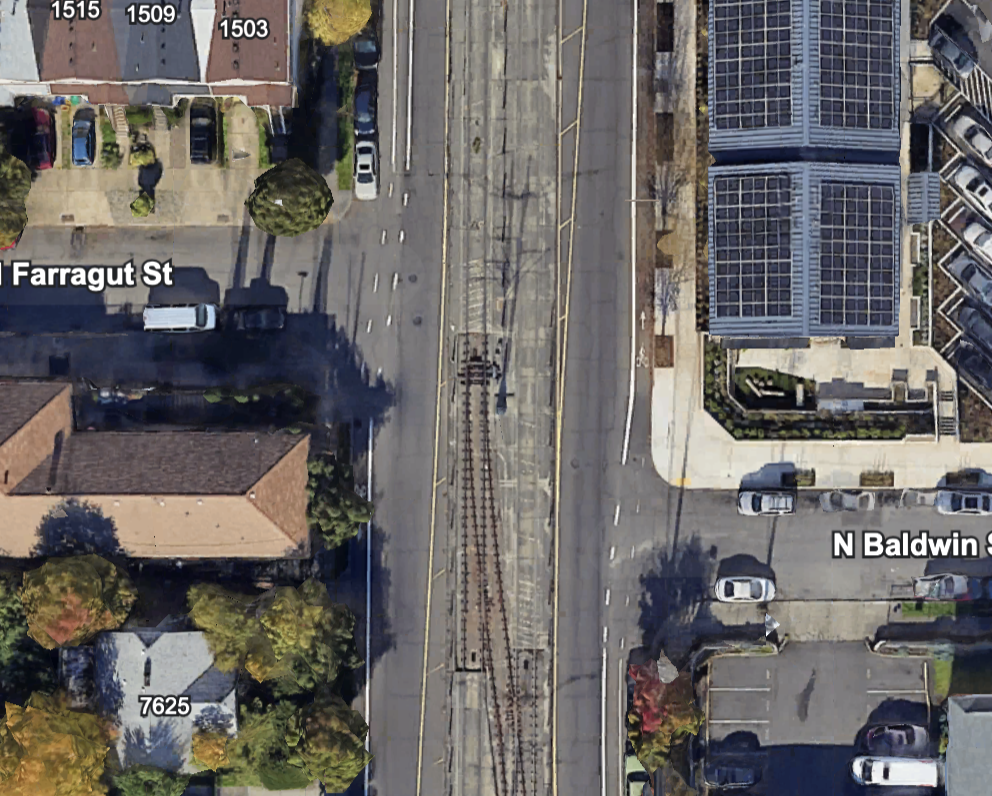
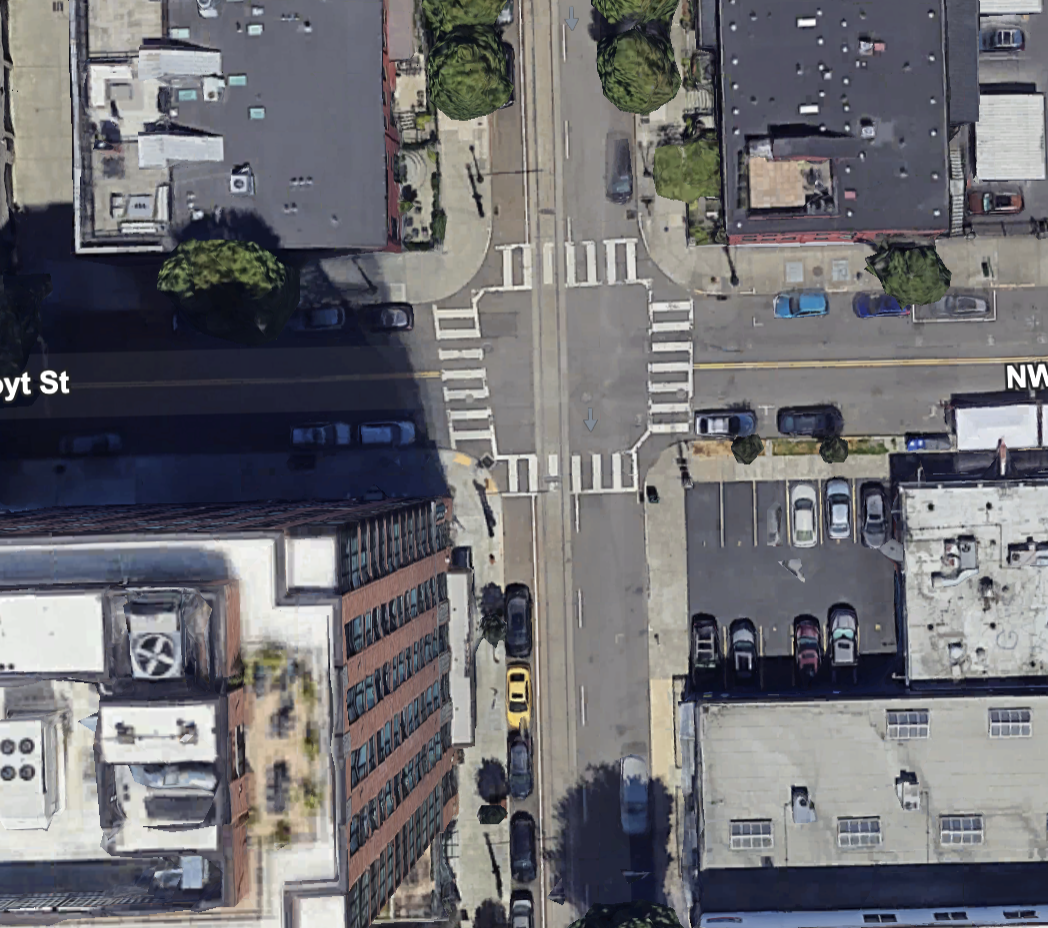
Typical Yellow Line infrastructure (left) contrasted with streetcar infastructure (right). Note the placement of parking relative to the tracks, whether or not cars can use the tram lane, and whether or not cross streets continue over the tracks
This design gets results: the yellow line has higher speeds, higher total ridership, and higher per-mile ridership than any of Portland's streetcar lines. And that's despite most of the line traveling through neighborhoods with far fewer transit riders than the streetcar:
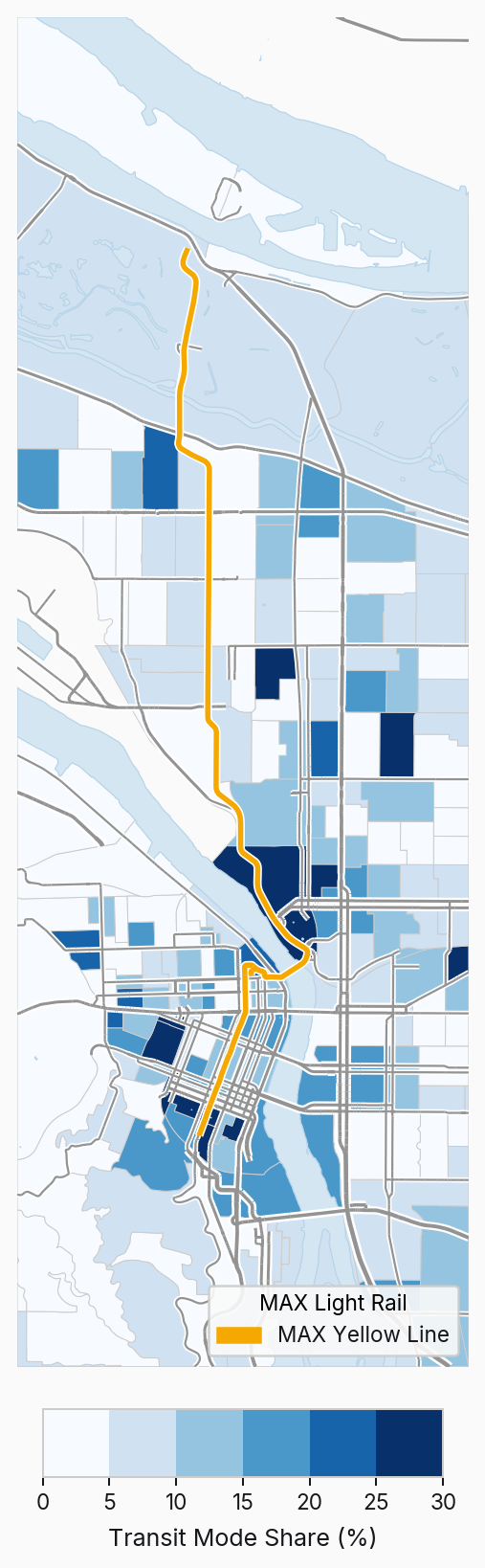
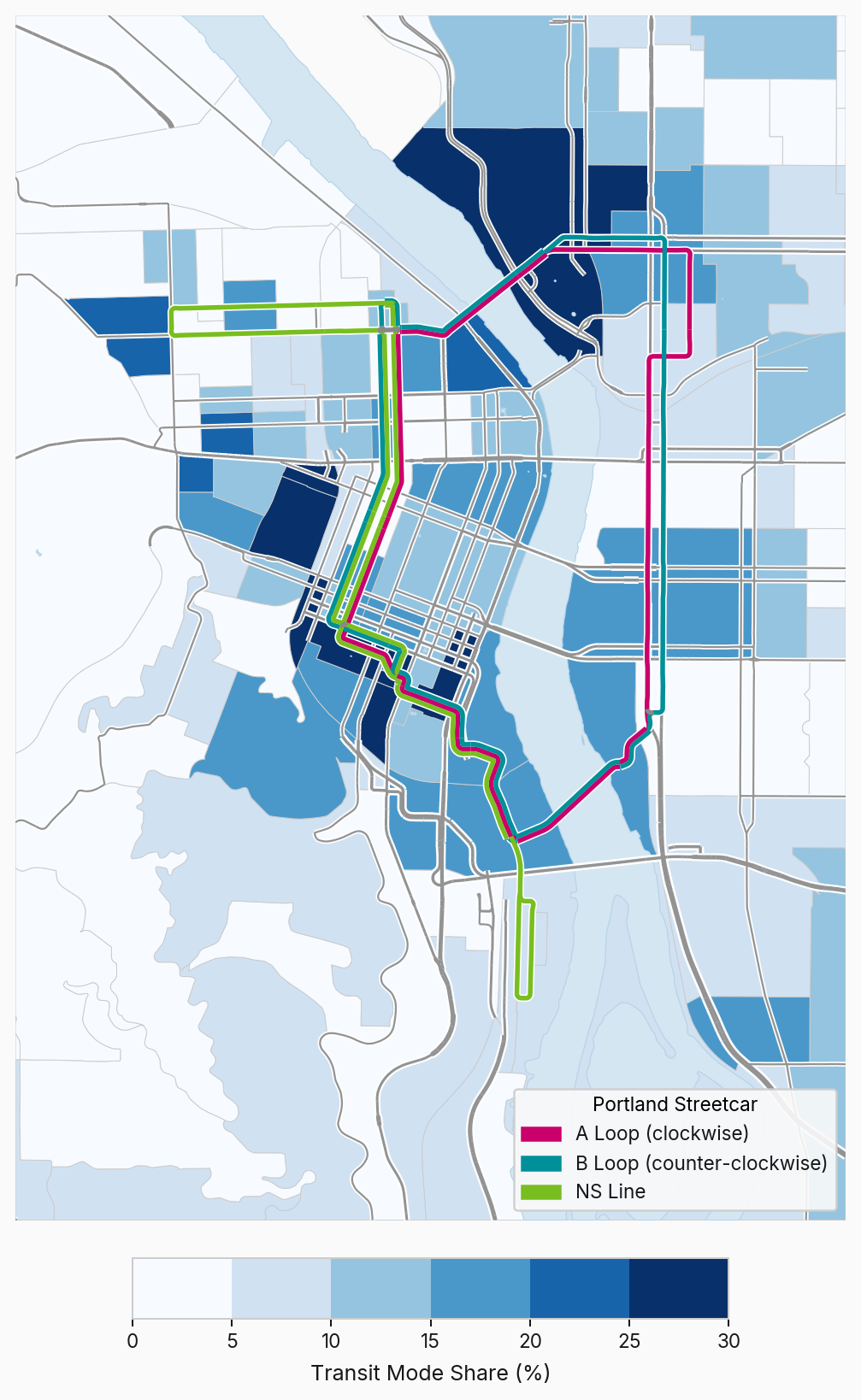
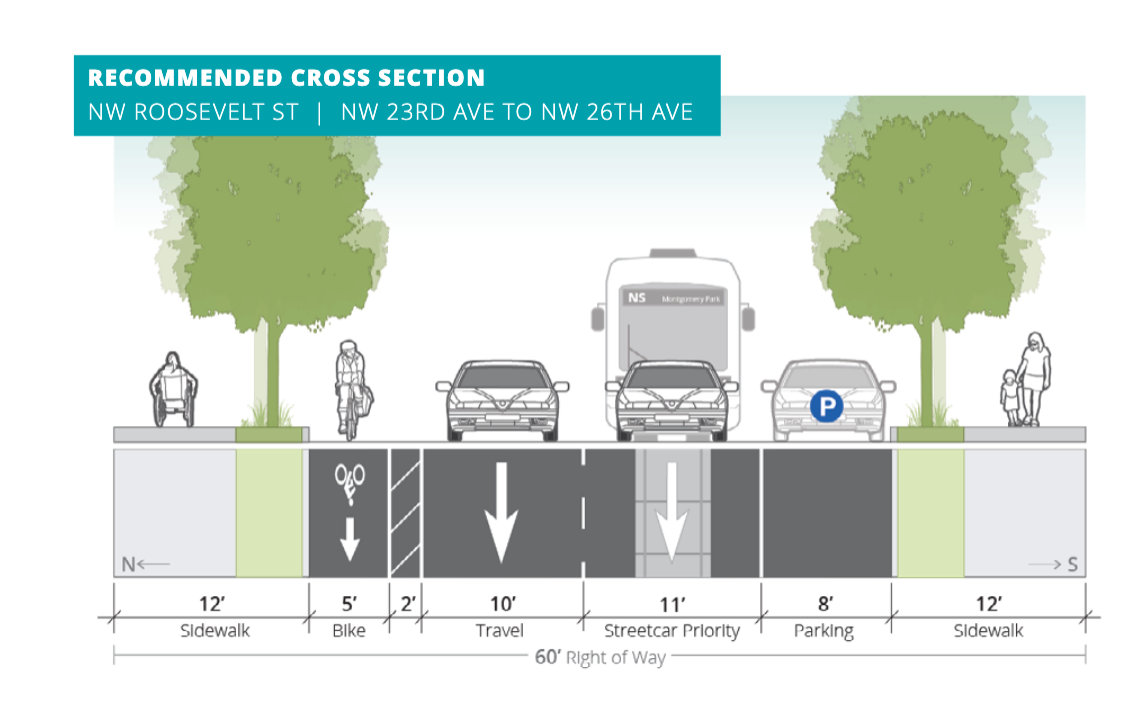
Building a streetcar at Yellow Line standards on Burnside or Sandy would be a game-changing transit investment. But there's very little evidence of any appetite for it among policymakers: the Montgomery Park streetcar extension was voted through the Portland city council with little commentary on its lackluster design, and Trimet didn't even consider implementing the actual Bus Rapid Transit standard on the 82nd Avenue Transit Project.
When Portland was a growing city with growing transit ridership, these concerns could be easily dismissed. Today, policymakers and advocates alike need to adapt to the reality that Portland transit is struggling and we need to analyze how every proposed capital project will improve operational efficiency and deliver desirable services for riders.
There's potentially an opportunity to advocate for infrastructure improvements in existing streetcar lines, and in the Montgomery Park extension. But the streetcar's issues are so systematic, across every block of every line in the network, that we're left without obvious bottlenecks we could address that would build the case for a larger streetcar network rebuild. It's hard not to feel like any effort spent lobbying for streetcar improvements would be better spent on fighting for bus lanes or even megaprojects like the downtown MAX tunnel.
Without new transit funding next year, we'll be facing even tougher questions. If Trimet can't pay for streetcar operations, and the city of Portland's budget deficit woes continue, is this service actually worth maintaining? I'm not ready to make that case yet. But I do worry that further expansion of the streetcar network is going to put a financial strain on Trimet and the city of Portland that neither can afford.
