What is social housing, anyways?

Everyone is talking about social housing. Seattle is building it, Portland is funding it (and studying it), and Maryland has supposedly been doing it for years. The issue can seem nebulous, but I'd like to lay out the argument that in fact it's an important opportunity to borrow international best practices from countries that are building more public housing, at lower costs, than the united states.
Some history
US housing production declined for most of the second half of the 20th century, creating a housing shortage that exploded into an acute crisis after homebuilding collapsed in the aftermath of the 2008 financial crisis. In response, the YIMBY ("Yes In My Backyard") movement emerged in the 2010s, with a relatively simple premise: US cities produced the housing crisis through restrictive zoning, and could solve it by changing zoning laws to allow more infill development.
YIMBYs in Portland ended minimum parking requirements and legalized fourplexes on every residential lot in the city. Here, pro-housing reforms enabled a boom in housing production that petered off before the COVID 19 pandemic, with housing production levels remaining low in recent years:
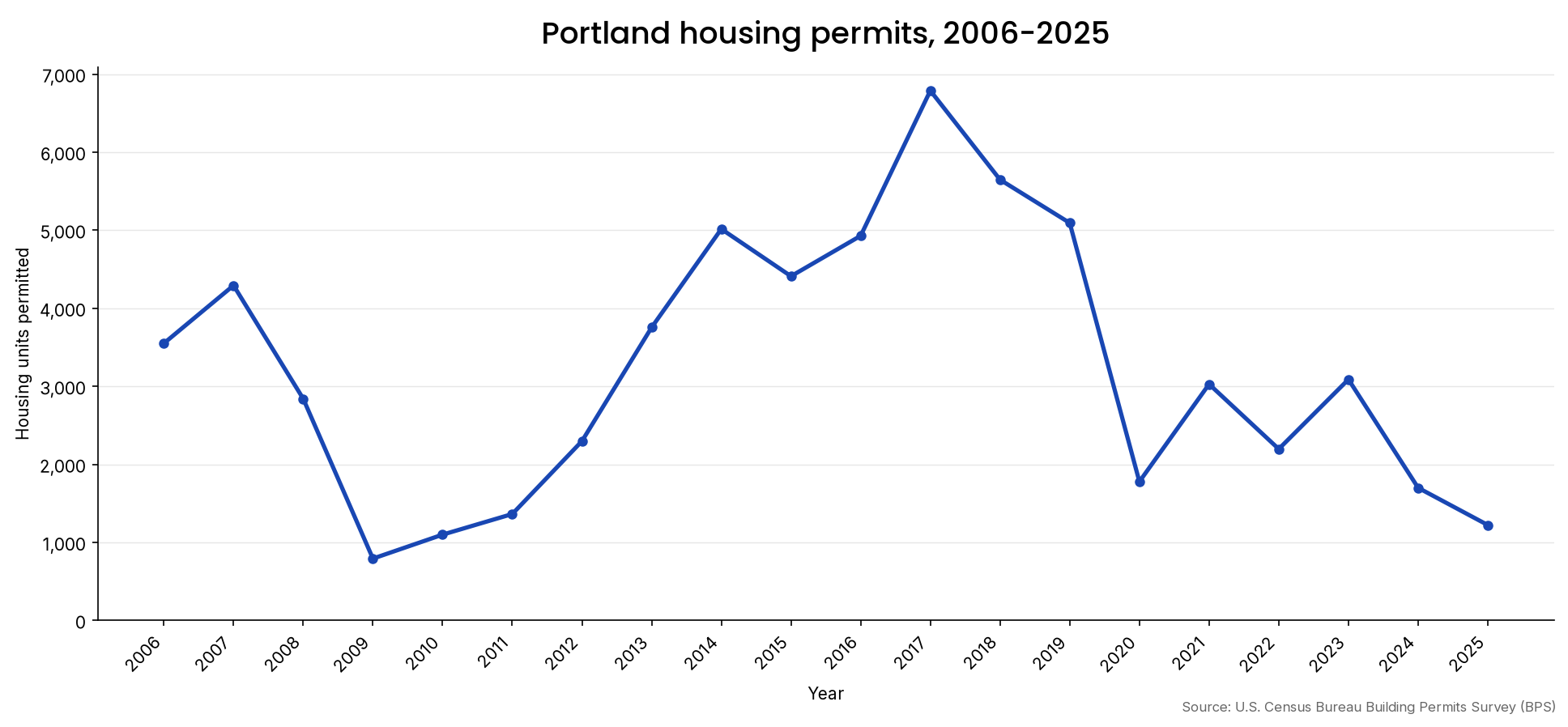
In Portland and other cities, housing reformers are no longer exclusively focused on zoning codes and now take a more intersectional view that land use rules interact with building codes, taxes and fees, and financing costs to determine the viability of new construction. This is the context in which social housing enters the conversation, and it addresses a couple of distinct issues.
The first is the limitations of the federal Low Income Housing Tax Credit (LIHTC) program. LIHTC bonds are used to fund most of the affordable housing produced in the United States. The program has a number of issues. In particular, states have limited funds and LIHTC funded projects must pursue multiple streams of grant funding that often requires multiple rounds of applications to acquire, resulting in long timelines and high costs. LIHTC developers also have little flexibility around rents, and can end up in financial trouble if costs rise or market rate rents fall.
This was one of the main motivations for Montgomery County, Maryland, to establish one of the country's first modern social housing programs:
That means it can develop and finance its own projects "instead of waiting for Congress to give us a whole bunch more money," says Zachary Marks, the senior vice president for real estate with the county's Housing Opportunities Commission. The public agency owns the controlling stake in these apartments.
Congress has moved away from funding public housing for decades. And while there are federal incentives to help the private market build lower-cost apartments, "we're using them all up every year and it's not enough," Marks says.
— NPR
A second issue that's emerged post-2020 is the high cost of financing. Because most housing production is privately financed in the US, the costs of housing production are closely tied to the costs of borrowing, which has been persistently higher in the 2020s than the 2010s. Housing developers need to acquire capital from competitive capital markets, and their costs are not only influenced by the Federal Reserve's interest rates but also competition for financing with higher-margin businesses like data center construction.
In the past, the US had programs that insulated multifamily construction from these costs, but these have largely been eliminated. Today, we're left with just the LIHTC, which is not an efficient tool for maintaining housing construction levels because of its high costs and limited funds. Social housing programs address this issue by creating pools of capital that are reserved for housing construction and not subject to market pressures.
At this point, it's worth saying as well that there are several problems social housing does not solve. It doesn't solve shortages of land zoned for dense housing, or building codes that make infill housing prohibitively expensive. It's not an automatic remedy for NIMBYism, and might even be less politically palatable to some anti-housing locals than market rate development. And while it's a good tool for keeping housing costs low over the long term, it requires local governments to embrace projects that charge near-market rate rents on most units.
Some case studies
While "affordable housing" in the US tends to refer to specific government programs like section 8 and LIHTC, "social housing" is much broader. Surveying programs at home and abroad, we do tend to see a couple commonalities:
- Projects are funded wholly or partly by low interest loans from "revolving" loan funds. As a project pays down its loan, the lender can use those funds to finance more housing projects
- Loan financing is viable because social housing projects make more money from rent than they cost to build. There are two primary models for this:
- Cost rent projects set rents based on construction, financing, and maintenance costs for the building
- Cross subsidy projects have some units that pay more in rent so that other units can pay less in rent
- Social housing projects allow at least some renters at higher incomes, and not exclusively restricted to very low income renters
- Social housing is usually built on land that is publicly owned and is sometimes leased to private or nonprofit developers to build on
There are some other ideas widely associated with social housing that I've found are not universal, especially in Europe:
- In the US, social housing is widely associated with public developers, where a government agency or state owned enterprise builds and finances housing. In the EU, the same process of privatization that created the US nonprofit housing industry also led to many social housing programs being handed over to nonprofit social housing developers and operators.
- Governance models for social housing buildings vary widely. Projects are not necessarily cooperatively owned, or governed by tenant councils, and so on, but social housing does allow for models that are not possible in privately developed and owned rental properties
In general, the commonality you see between social housing programs is a pragmatic use of public subsidies, reserve funds, and financing tools to build large amounts of housing and ensure that it can be operated sustainably over time. To illustrate this, I'd like to briefly discuss a couple case studies.
Vienna and Austria
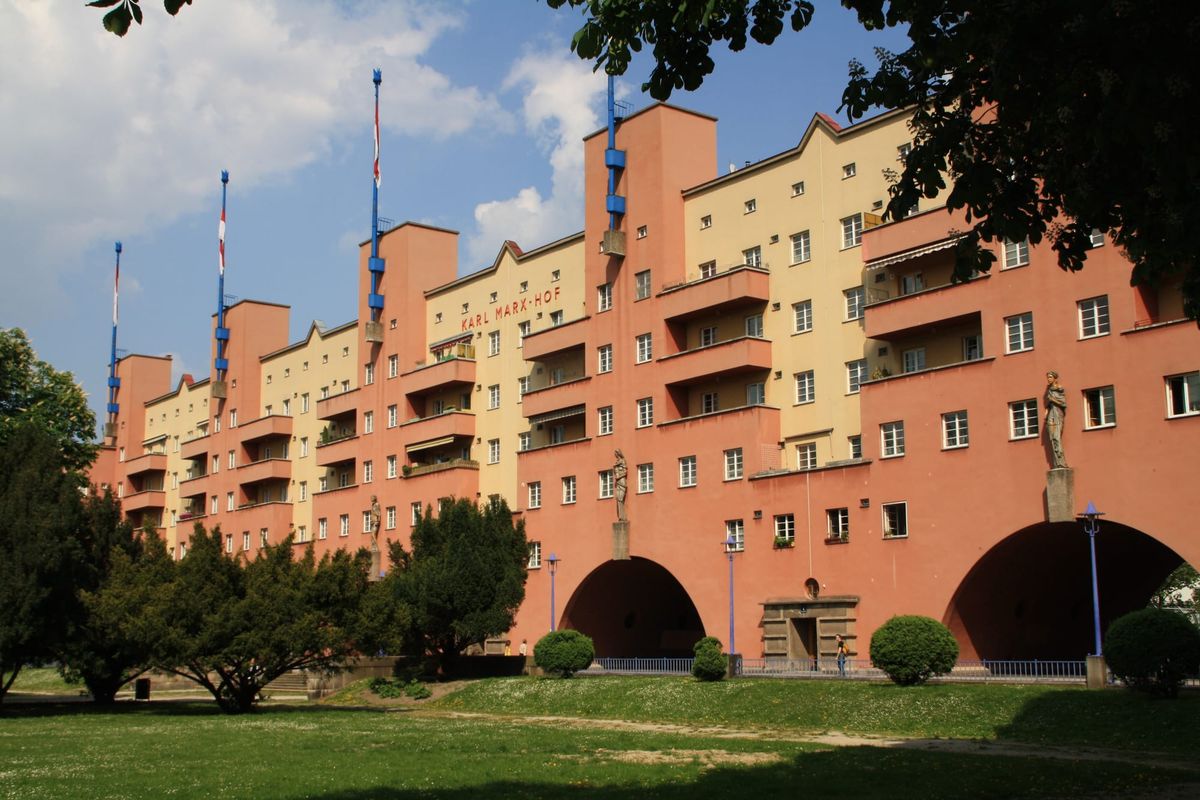
A majority of homes in Vienna are social housing, and they come in two main categories. Municipal housing is publicly constructed and operated, funded through a 1.5% payroll tax, with capped rents and no down payments required from new tenants. The city has a roughly equal amount of cost rent units maintained by limited profit housing associations (LPHAs), funded through a combination of low interest public loans from revolving loan funds and tax-deductible private loans.
LPHA developments operate like cooperatives, with residents paying down payments that help finance the building. Austrian cost rent rules restrict rents to an inflation-indexed base rent, plus additional financing and maintenance costs.
The contrast between the nonprofit development sector in the United States and Austria is notable: LPHAs operate 17% of Austria's housing stock while affordable housing developers operate only a small fraction of US homes, despite relatively facially similar financing regimes where nonprofit developers build homes with tax-exempt bonds.
Another observation that will recur as a theme in these comparisons: Austria has developed institutions in the private financial system that support public investment in LPHAs. You couldn't transpose this model directly into the US without recreating those institutions – one reason that US social housing will probably require a lot of public investment.
Sources:
- "Cost-Based Social Rental In Europe"
- "The system of limited-profit housing in Austria: cost-rents, revolving funds, and economic impacts"
France
French social housing is funded primarily with funds from tax-free Livret A savings accounts: depositors are not taxed on the returns from their accounts, and in exchange their funds are loaned to social housing developers. Per a UCLA report, these loans constitute about 75% of the average social housing project funding, with loan duration and interest rates varying depending on the level of subsidy provided to the unit:
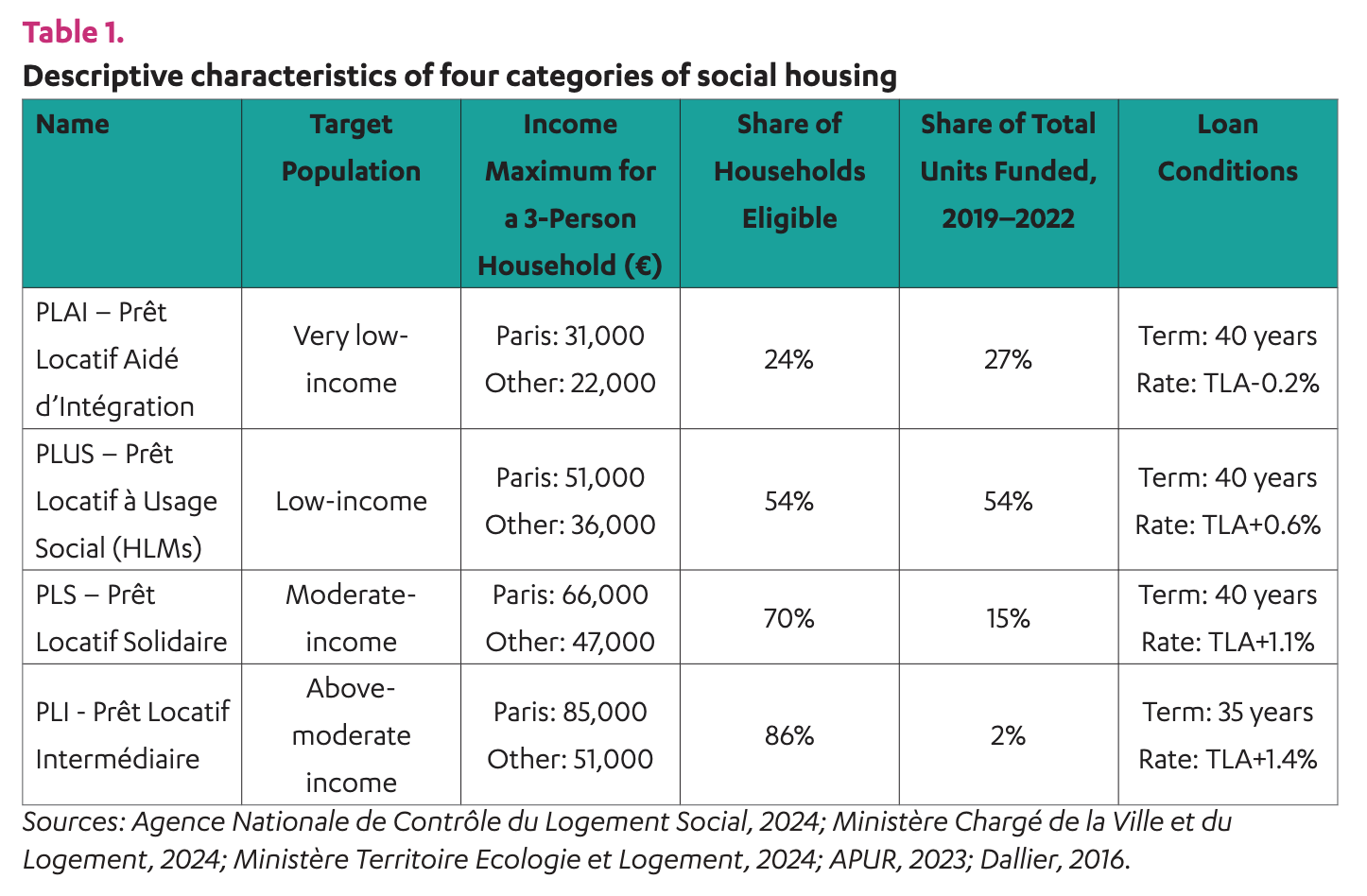
Rents are set based on cost, with direct rental assistance making up the difference between what a renter is able to afford and the listed rent price. Within a building, social housing landlords can sometimes offer higher rents to higher income tenants in order to lower rents for lower income tenants.
The report also notes that French social housing produces 75,000 units of housing per year, with " production costs [ranging] between €140,000 and €240,000 per unit" – almost three times the amount of units California built in 2025 using LIHTC funding, and with much lower costs per unit.
Sources:
The Netherlands
Dutch social housing is built and operated by nonprofit woningcorporaties. Social housing is financed through three mechanisms: first, social housing associations can reinvest income from rents and from selling social housing units into the private market. Second, through private loans backed by public loan guarantees, allowing social housing developers to borrow at very low 1-3% interest rates. Finally, local governments depress land values by zoning some lots specifically for social housing development, making those lots less appealing to private investors.
The state requires rents to be set below a "liberalization threshold" that applies to all social housing developments in the country; similar to cost rent systems, rents are not adjusted based on the tenant's income.
More than some of the other systems discussed here the Netherlands seems to struggle with social housing availability and affordability: one report from Harvard's JCHS notes that the average Dutch rent burden is 33.8%, and one developer they looked at saw more than 300 applicants on average for every new unit they opened.
Sources:
Singapore
Social housing in Singapore follows a different model that EU social housing. Rather than renting homes to social housing residents, the Housing & Development Board (HDB) builds homes and sells 99 year leases to residents. Financing for these purchases is provided by Singapore's public pension program, the Central Provident Fund (CPF): Singapore residents make mandatory contributions to the CPF, similar to the US social security payroll tax, and can withdraw funds to pay for HDB leases.
Combined with the Land Acquisition Act of 1966, which allowed the government to compel landowners to sell their land at low prices to the HDB, publicly owned housing now makes up the vast majority of Singapore's housing stock:
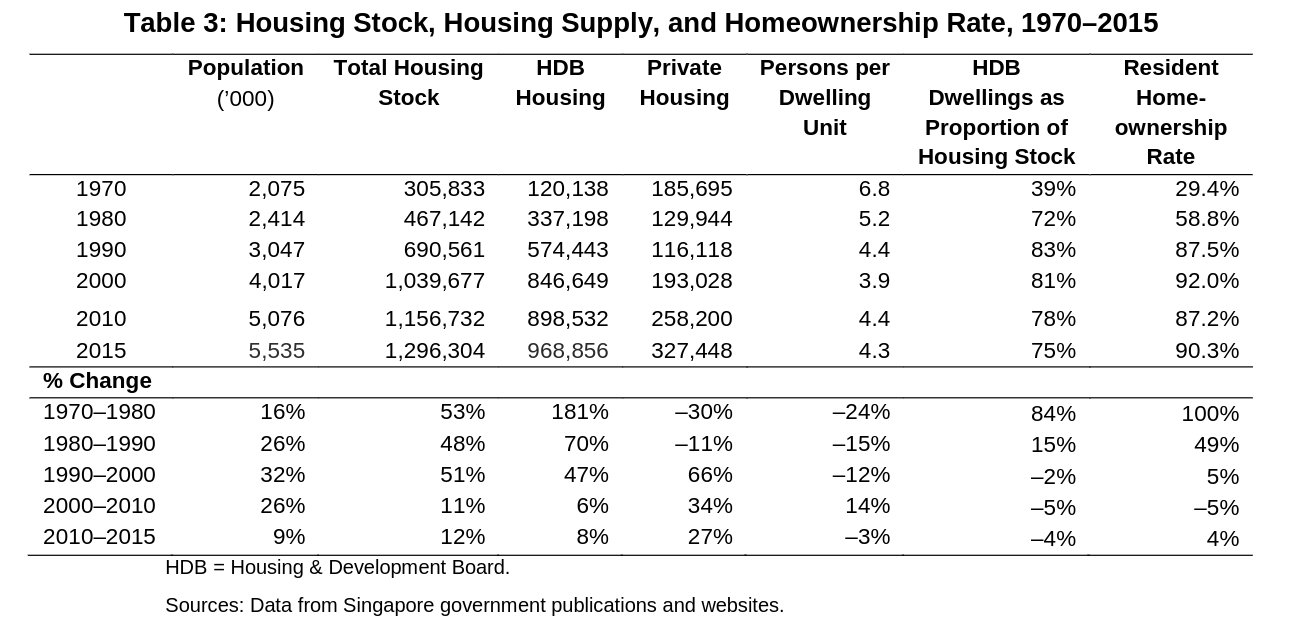
A lot about Singapore isn't applicable to US cities and states: the regulatory environment (not to mention the politics) around eminent domain is worlds apart, and local governments don't have a massive national pension program to tap for fiscal resources. But it's still interesting to be aware of as an alternative model for housing construction.
Sources:
Montgomery County, Maryland
In 2021, Montgomery County, Maryland brought social housing to the United States: using $50 million in municipal bonds they capitalized their Housing Production Fund (HPF) and financed their first mixed income public housing project. Montgomery County social housing projects have a "capital stack" that is closer to that of market rate housing development, with inexpensive HPF loans replacing expensive private equity:
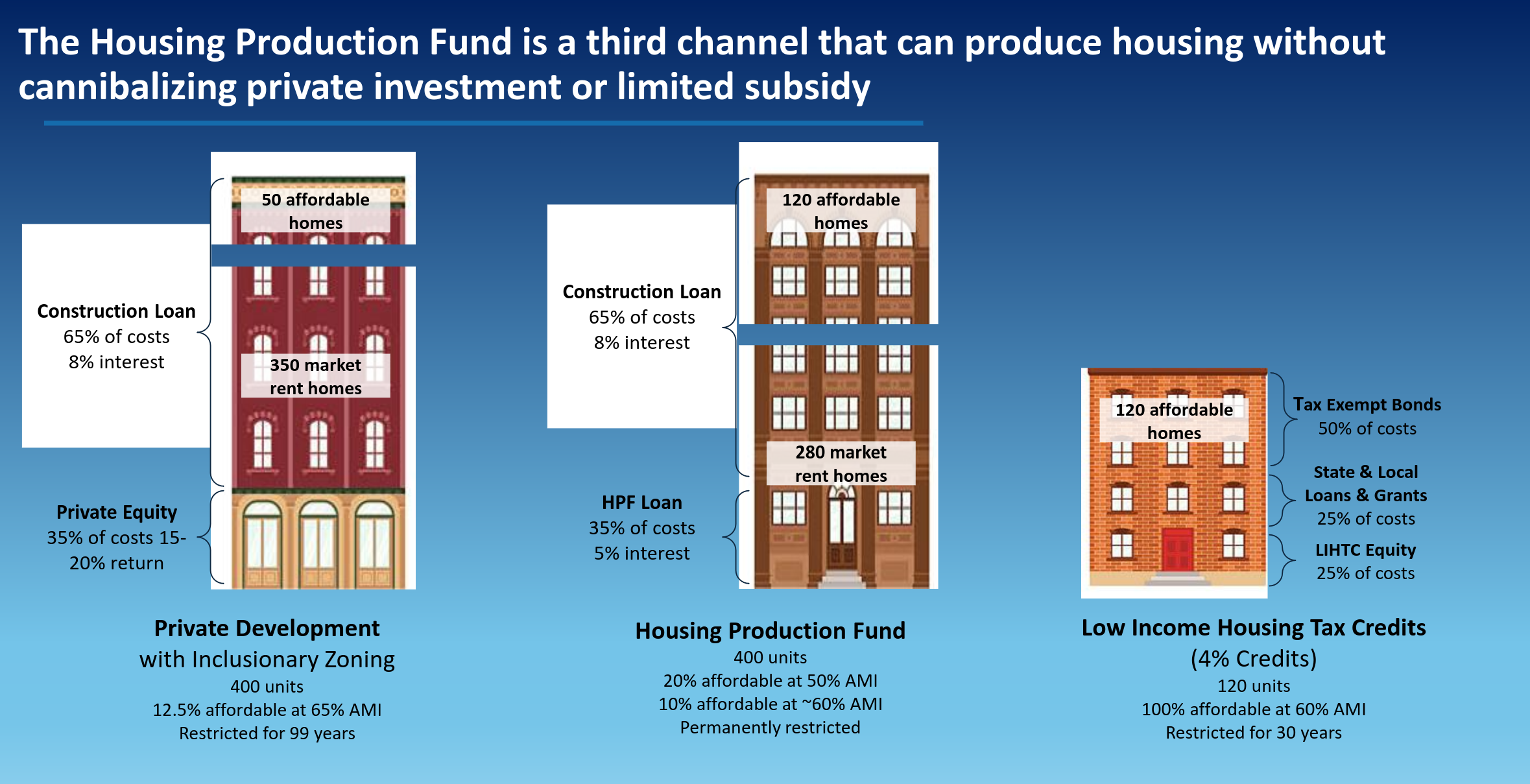
Market rate units in the HPF projects help fund a similar amount of affordable housing to pure LIHTC developments, but without the byzantine capital stack that makes LIHTC development so expensive or the use of limited federal funds.
It's worth calling out Montgomery County's use of bond financing to capitalize the HPF: at ultra-low COVID-era interest rates the county was able to access tens of millions of dollars up front in exchange for a small annual cost, with income from the new properties ultimately covering its bond payments.
The "Montgomery County Model" has proved popular elsewhere in the US, including Atlanta and Chicago.
Sources:
- "The Basic Logistics of Public Development"
- "Presentation on Montgomery County’s Housing Production Fund"
Seattle
Seattle's Measure 1A in 2025 established a new 5% tax on employee compensation above $1 million, directing roughly $50 million per year to a new social housing development agency. The agency is new, and starts with a few mandates in its charter:
- Including housing units that "accommodate a mix of household income ranges" from between 30% and 120% of area median income (AMI)
- Unlike in LIHTC projects, tenants cannot lose their residence because of an increase in income
- Meeting Passive House efficiency standards in new construction
- Limiting rent for residents to 30% of income
- Using union labor in construction projects
The charter also suggests exploring Singapore-style resident-lease models, although it isn't a requirement for the developer.
The new developer has plans to move aggressively, buying a 150-unit project outright in its first purchase and securing sites for multiple future projects, with a goal of building or buying 1,800 total housing units in its first six years. New bonding authority acquired in 2026 will allow it to use its rental portfolio as collateral for debt, allowing it to borrow against both rental income and tax income. The developer plans to use these resources aggressively, spending down $180 million in bonds over the next two years and likely bonding more as soon as 2028:
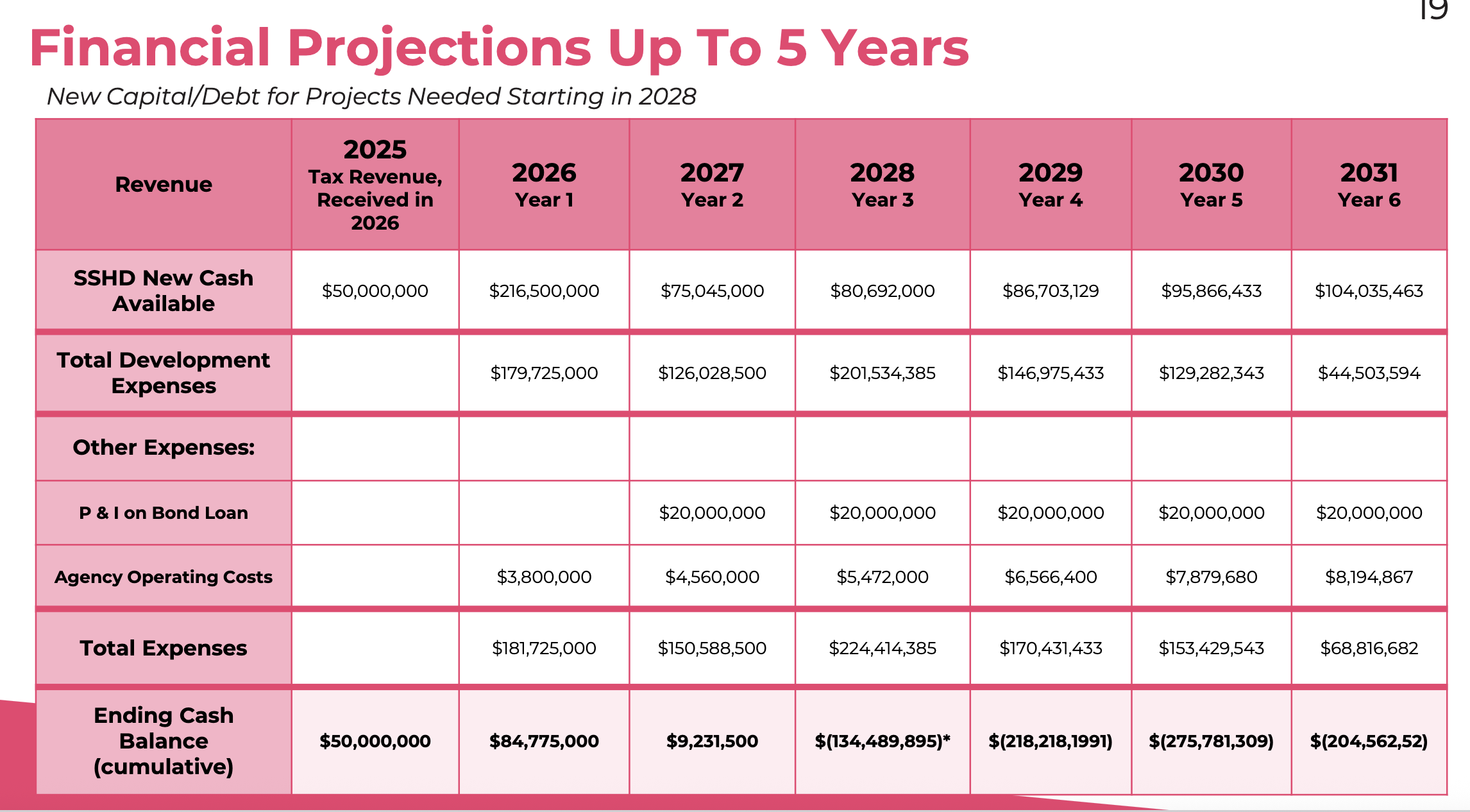
So far, the developer's income tax has overperformed projections by a large margin, which may allow them to borrow less and acquire land more aggressively in the immediate future.
One challenge for the social housing developer in the future will be balancing charter-mandated costs with financial sustainability: the Passive House requirements and union labor mandates, reasonable or not, will create costs beyond those required for market rate development. This kind of cost control has been a challenge for programs in other cities, with Seattle's main advantage being that is has a significant ongoing revenue source. Ideally, these requirements will make the program more politically durable and help it produce desirable homes. But if the program struggles to build cost-effectively they may be worth revisiting, or the developer might want to seek dedicated funding streams to subsidize these requirements.
Sources:
- Seattle Social Housing Strategic Plan
- Restated Seattle Social Housing Developer Charter
- Presentation to the Seattle City Council Housing, Arts & Civil Rights Committee on February 11th, 2026
Lessons for Portland
Surveying the landscape of social housing policies in other cities and countries, we can identify a couple of criteria that make Portland a good fit for social housing:
- Negative press about the costs of building LIHTC affordable housing
- The city has exhausted its affordable housing bond funding and needs to seek new funding for housing construction
- At current rent prices, very little market rate rental housing is financially viable for private developers
In comparisons with the city of Vienna, much has been made of the fact that Vienna has a massive land bank acquired during a period of post-WWII depopulation. But Seattle's social housing developer shows promising signs that successful US social housing doesn't require circumstances as extreme as Vienna. In cities like Portland and Seattle a public developer can take advantage of a downturn in the housing market to acquire properties being sold by developers at a loss, and the public developer can leverage its lower borrowing costs to operate those properties at a profit despite charging lower rents than the previous private owner.
Seattle illustrates another important lesson for social housing program design: social housing stacks together multiple kinds of subsidy (property tax exemptions; subsidized loans; direct cash grants) resulting in lower development costs than market rate housing. Policymakers can use this subsidy to build more, to lower rents below market rates, to add amenities to projects, or to absorb costs that market rate projects can't absorb (like prevailing wage or union labor requirements). In doing so, they are ultimately spending down a finite budget – stacking too many costs onto a social housing program will damage its long-term viability. In developing social housing policy, we need to be able to have an open conversation about these costs.
A final lesson from other social housing programs is that advocates should embrace social housing as a good governance project. High development costs in LIHTC projects are routinely cited as a barrier to social housing implementation: it's critical to be able to point to social housing programs elsewhere in the US and abroad that have achieved lower development costs through better program design, to make the argument that social housing is actually a solution to high LIHTC costs.
Is any of this actually viable in Portland? For case studies, we can look to Prosper Portland, who has dabbled in the kind of mixed income development and loan financing that would be the bread and butter of a social housing developer. Earlier this year Prosper approved a loan to the Lents 92H project in the Lents Town Center Tax Increment Financing district. The $10 million, 5% interest loan covered about 20% of project development costs, with the rest coming from developer equity and a conventional construction loan:
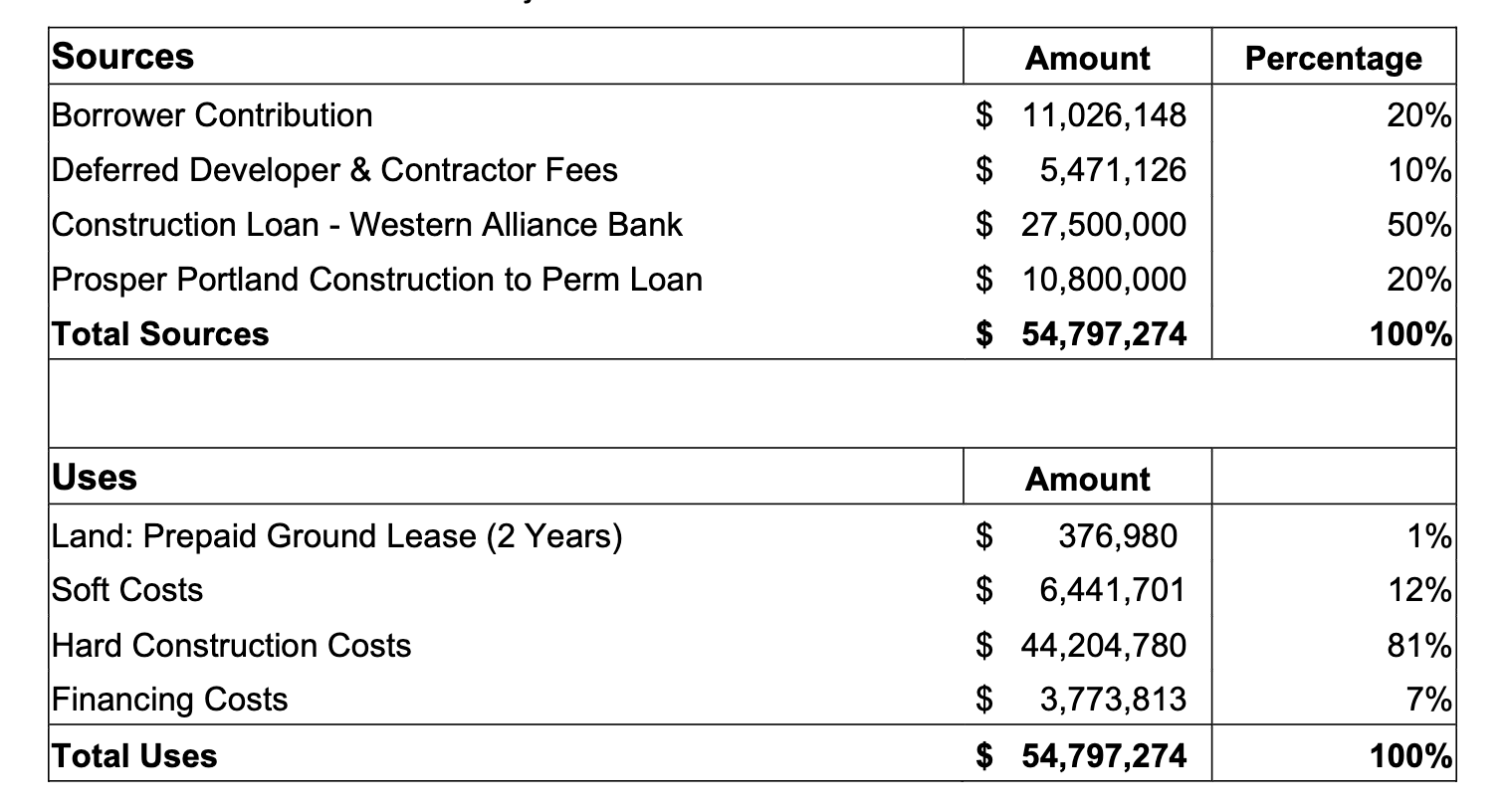
This is a similar capital stack to the Montgomery County model: a subsidized gap loan plus conventional financing, on publicly owned land (in this case, leased to the developer rather than owned outright by a public developer) with a combination of market rate and subsidized units in the project.
Perhaps a bigger question is where the money for a social housing program would come from. The city has already reserved $17 million in funds for social housing, ultimately a small first step.
A straightforward path to funding a full-sized program is new tax revenue. The city could pursue a local option levy, temporarily raising property tax rates to either issue bonds or directly pay for social housing development. Portland's 2016 housing bond raised $250 million to fund LIHTC affordable housing development. A similar-sized social housing levy would build thousands of housing units and could create permanent financial resources to fund further housing construction – in contrast with the 2016 housing bond, where construction ended after funds were exhausted.
The city could also work with Metro to pursue an increase in the Metro Supportive Housing Services (SHS) tax, currently a 1% income tax on high earners. SHS tax revenues are distributed to the three Portland metro counties, so new SHS revenue could also seed social housing programs in Washington and Clackamas counties. Any of these options would require a successful ballot measure.
If new taxes are too politically sensitive, there are opportunities to get more creative. Looking to France and Singapore, the city could tap reserve funds and investment funds as a source of social housing financing. Between the City of Portland's own cash reserves, the Portland Clean Energy Fund, Trimet, the Multnomah County Preschool for All program, and others, there are billions of dollars in reserve funds sloshing around the Portland metro. If a careful actuarial analysis found that the region's governments could earn a reasonable return at a manageable risk level by investing in social housing, we could unlock a huge amount of fiscal resources with no additional cost to taxpayers.
Taken together, we can say that social housing is financially viable in Portland and we have a range of options for funding and implementing it. Our housing production goals set a target of 6,000 new homes built per year, a target we've missed every year since it was established. The city urgently needs more tools to address this crisis, and social housing should be one of those tools.